


![The sophomores were recognized on the field instead of walking across the stage during their doubleheader. They received their diplomas and a picture of themselves playing during their career at Seward. [Pictured left to right are Dylan Day, Reed Thomas, Jase Schneider, Mason Martinez, Gannon Hardin, Brody Boisvert, and Zach Walker]](https://crusadernews.com/wp-content/uploads/2022/05/WEBDSC_0275-900x454.jpg)

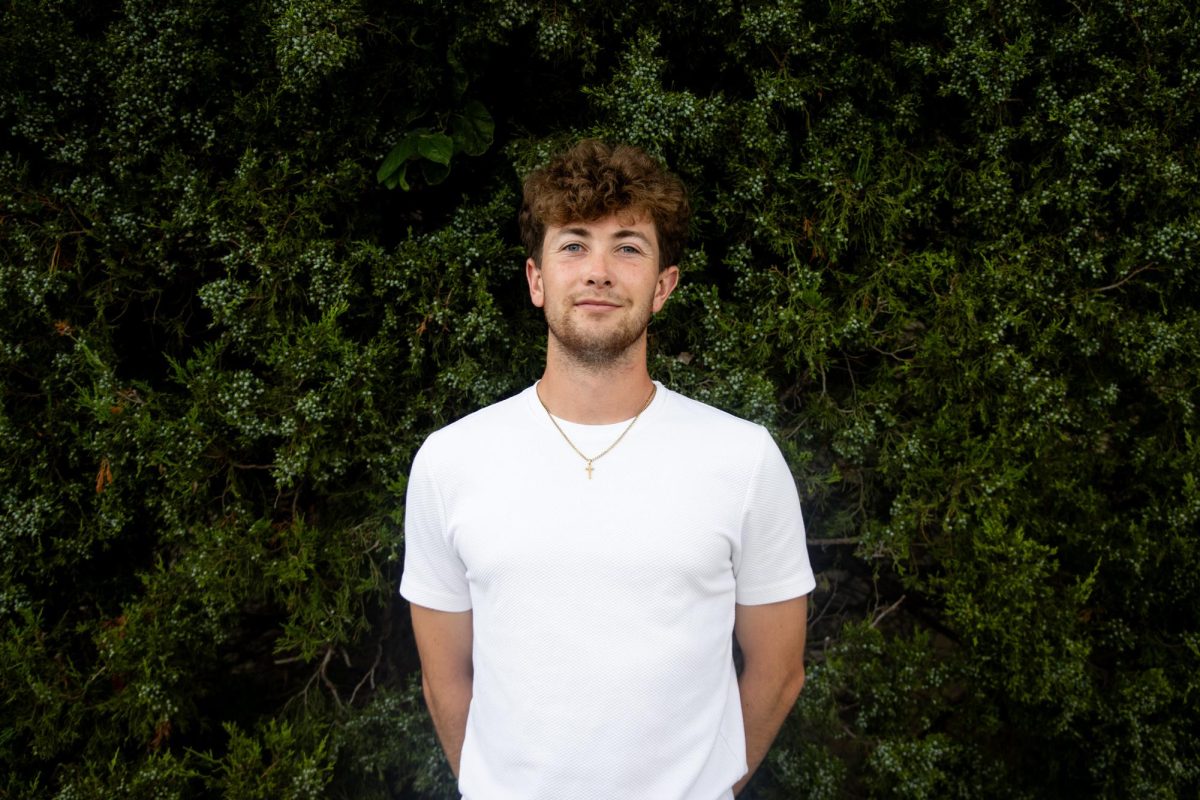












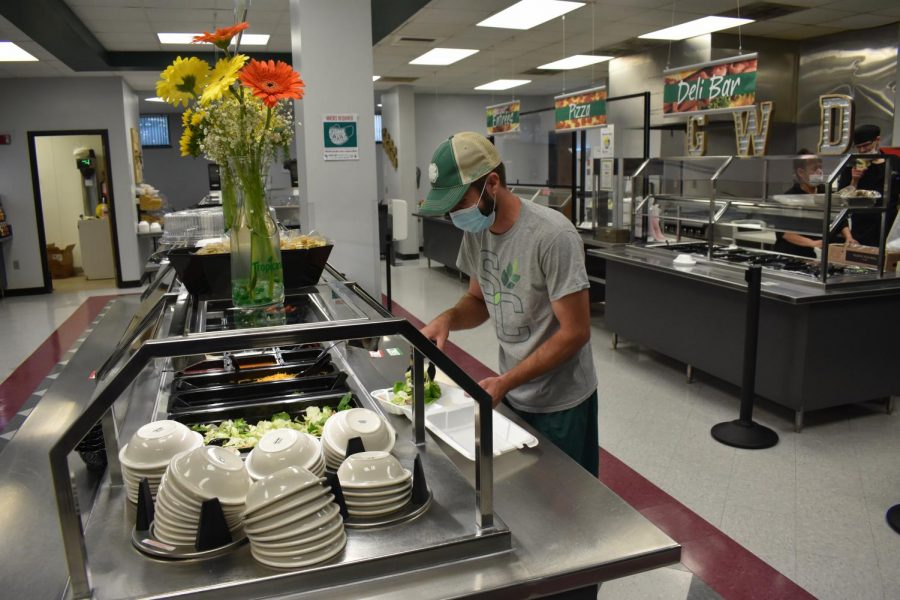
On Mar. 5, the Hispanic American Leadership Organization hosted the event “Education is Power” with speaker Dr. Jose Luis Zelaya. The event, while at Seward County Community College, was open to the public including high school students invited from Ulysses, Guymon and Santana. After a private breakfast with HALO sponsors Dr. Lizette Avalos and Kathy Alonso, and after an interview with Crusader News staff, the HALO members provided lunch from the SCCC cafeteria for Dr. Zelaya and took the opportunity to connect with him.
After lunch, HALO members gave the visiting high-school students a tour around the SCCC campus. Following the tour, the high schoolers met with the HALO team and were given a presentation about the club and a student panel in which members gave college advice and talked about their personal experiences at SCCC. After the introduction, food was provided along with a talk with Dr. Zelaya who introduced himself to the high school students. The night ended with his speech, “Education is Power” at SCCC’s Showcase Theatre.
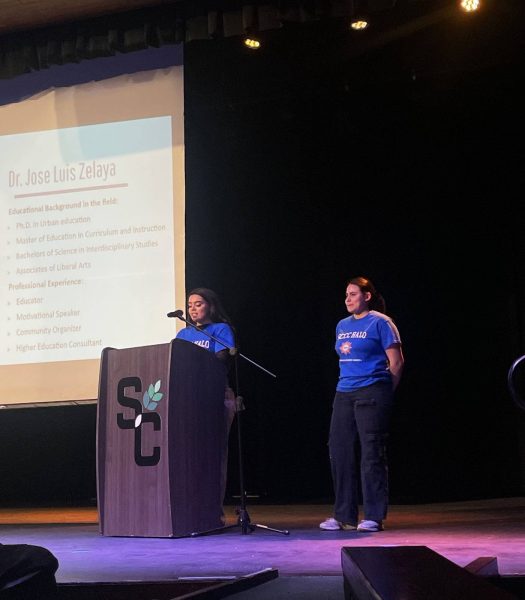
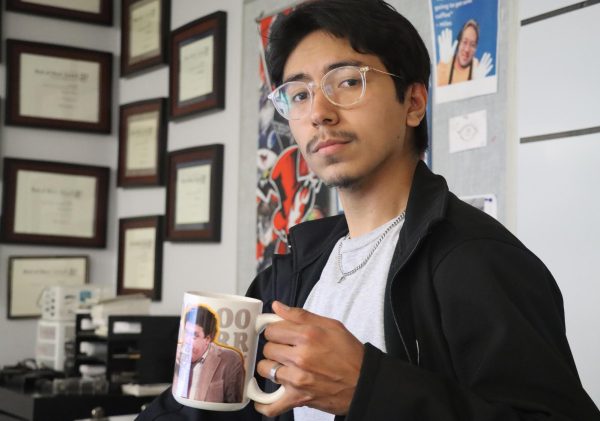
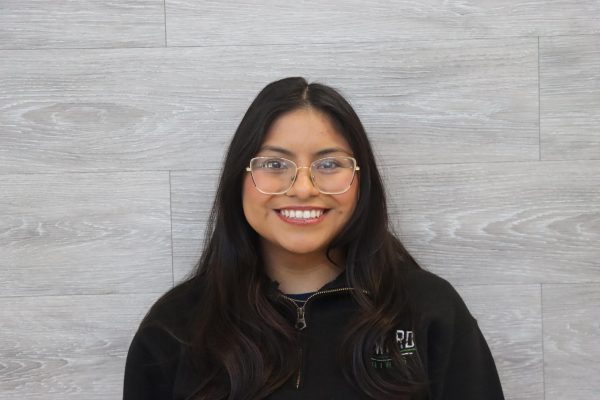
Before his “Education is Power” speech at SCCC , Crusader News members Angelica Gutierrez and Jesus Holguin had the chance to interview Dr. Zelaya.
Have you ever been to Liberal, Kansas before?
No, this is my first time.
What differences do you notice between Liberal, Kansas, and Texas?
Well, Texas is huge, so there are similarities in certain areas. I’m from a small town myself. College Station has about 250,000 people, which puts things in perspective when Liberal has around 20,000 [people]. But some things feel familiar: People are kind, welcoming, and open to conversation. Climate-wise, it’s a bit chillier here, but it’s a beautiful community. What struck me most was the small airport and within just a few hours, I met people from Germany, Nicaragua, Mexico, and heard there’s a Honduran community here. In fact, we’re planning to visit a Honduran restaurant to connect with that community.
Do you have any advice for incoming students that want to go to a community college or university?
Yeah, I think my advice – which was true when I first started and is still true now that I finished – is to have a long-term plan and to see how the present is connected to the future. Although when you plan for the future, things might not be exactly how you planned them, but not planning for the future is planning to fail. So I think that being able to think about the future and seeing higher education as part of the process, it’s proven that it provides a series of benefits, not only academically and professionally, but the network and the people and the friendships and the knowledge, and you as a person, you develop. And now that you wouldn’t do that in a different environment, but I think that higher education provides a safe environment in order to be able to grow while at the same time being proud of who you are and representing who you are and bringing your families and your communities to new places.
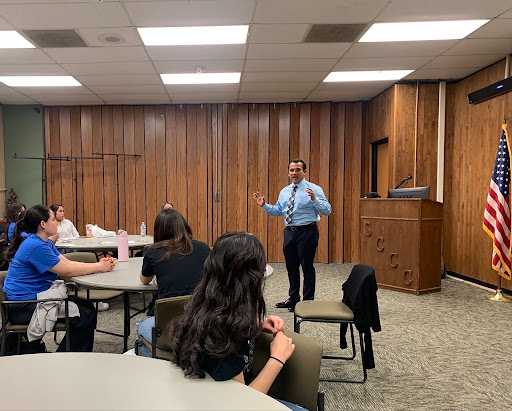
(Jesus Holguin)
Can you tell us a little backstory about Honduras? How was it there in your life, as in childhood?
Honduras is beautiful. Like, extremely beautiful. Very similar to here, like with very humble, hardworking people. But there were some differences. Economics are definitely very challenging and very different. Poverty, it’s a whole different type of poverty. Like poverty can be defined as a family that makes between $2 to $5 a day. But yet prices of basic needs like milk or eggs or rice or beans are very comparable to the U.S. market because of the whole import and export type of international laws. So poverty is very, very challenging. I remember as a kid growing up in the streets, working since a very young age, doing a series of hardworking jobs because those were the values that they instilled in you since a very young age.
Violence was also something that was different. Now that we don’t experience violence in the United States because we do, but there is also a difference between a country who has a background in historical colonization and a background of countries who are on the other side of that coin, like the United States. So the residues of that colonization, the violence is so much, it’s so out of control. Since I was a very young kid, I remember being surrounded by extreme violence, extreme poverty, natural disasters, where you don’t have the mechanisms or the resources to be able to help people in need. So people are often migrating, people are often escaping, people are often trying to survive and going to other countries.
So I remember a mix, a mix of things. Growing up in, you know, among mountains and among rivers and oceans because I lived in the streets. So because I lived in the streets, like my showers, for example, were like waterfalls or like rivers where we did clothing, we didn’t go to, like, a laundromat and we went to a rock at the river to do laundry. And although somebody might think of those things like, oh, that is such a poor thing to go through. When you’re a kid and you’re going through those things, it’s amazing. It’s incredible. It’s beautiful. You don’t think of yourself like you’re living in poverty. You don’t think of yourself you’re living in violence because everybody around you is also going through it. But as you grow up and you come to a country like the United States and you see that life can be different, that definitely helps you develop a sense of higher gratitude for the things that you now have, but also gratitude that you were able to survive and go through the things that life tested you at such a young age.
So it’s a mixture of emotions. Very beautiful, but also very challenging.
As a kid, everything that you saw around was just normal until you came to America. Like it just seemed like, oh, that’s how everyday life is.
Yeah, it was a survival of the fittest. You’re not thinking about the long term. You’re thinking about, “¿Qué voy a comer más tarde?” Like, what am I going to eat later? And even within that, it’s not like, “Oh, what am I going to get from the fridge so that I can cook?” But it’s like, “What job am I going to do so that I can earn money so that I can eat?” And when you don’t have the ability to earn money, for myself in my case, it was a matter of, like, digging into trash cans. It was a matter of walking into restaurants and begging people for food. It was a matter of doing whatever you can to do it. Or in some cases, like even drug yourself so that you don’t feel hunger. So it’s a series of feelings. But yeah, you don’t know that things are different because that’s your normality.
Going back to the concept of childhood, you know, not only do you have that nature, but also sometimes you didn’t even need to like in a sense, like work for food. Like it was a matter of grabbing a rock and bringing a mango down. It was like walking in the streets and finding tamarindo [a type of fruit] on the floor. It was a matter of grabbing oranges because you live in such a tropical country that in these mountains, there’s food. So you grow up among this very beautiful place. But it’s, you know, but it’s also very painful because poverty for me didn’t just take away basic needs. But when I was five, I lost my brother who was only two years of age because we could not afford to take him to a hospital. So he passed away due to an asthma attack. So the pain of that level of poverty is not only figuratively, but it also has very serious consequences. Like my brother would be 37 years of age if he was still alive right now. But I had to live with the memories and the scars that he wasn’t there.
Also, the violence is not just something that it’s normal. Historically speaking, Honduras, for example, in the 80s was going through wars. In the 60s, it was going through international wars. So there were civil wars, there were international wars. And I was born in 1987. So it’s not only the pain that I experienced from 87 to now, but it’s also everything that the country experienced prior to me being born. And me being born in that set of time and being impacted by what had happened prior to me. But even now, as I meet people that come from Honduras or other parts of Central America, they echo some of the same experiences that are currently going on right now. Making the same wages, talking about the same levels of violence, experience very similar natural disasters, and people continue to migrate.
So it’s very difficult, because although I am grateful that my life has changed, I still also acknowledge that realities continue to be very similar to people that are experiencing some of those challenging stages in life.
Pursuit of education, did that come in a single moment, or was that something you learned gradually over time?
I think it’s both. I think that it happens over time, because the concept of education is very relative. Like, my parents didn’t graduate from a university, but they’re very educated. I mean, they taught me values. They taught me mannerism. They have taught me responsibility. They have taught me definitions that no books can define, like sacrifice, like having a series of words that define a term cannot stand justice after seeing everything my parents have had to do, and me witnessing those things. So I learned from my family. I learned from hardworking people. I learned from the experiences that I have had as a child. I have learned things from books, but most of what I have learned has come from life. And I think that when you make those two connections, that you validate and you value what you have gone through, and then you find a source like institutions of higher education and professors and people who also have a lot to teach, but you also have a lot to teach. And when you make that combination of learning, I think that that has been amazing for me. Sure, I showed up into a calculus class, and I learned that one formula whenever it was taught. But what helped me learn that is it was the determination and the perseverance that I have grown up with throughout my life. If I would have not had those values, there’s no way that I would have been able to stay committed to learning chemistry or to learning physics or to learning history or to learning geography or to learning all of those things that happen in the moment. So I think that it’s an evolution of learning, but there’s definitely moments in life where your life changes.
I have met people in my life that they told me, take a right, and I was about to take a left. And because I trusted them, and because what they were saying makes sense, and I took a right, I was like, okay, this was a better direction. Or maybe I took a left, and I realized, wait a minute, like, aprendí a coscorrones. I learned the hard way. And then maybe the following time, when somebody was more open to give me advice, I was more receptive to listening, and to at least, even if I didn’t agree, to see where they were coming from and to help me make better decisions.
So I think that education, it happens all the time. I’m learning right now. Like, I learned this morning. And if you stop learning because you have a degree, like in my case, I got a PhD, but I’m learning from my children. I’m learning from my mom, the advices that she continues to give me. The moment I believe that a degree is the stop of learning, it just proves that that education is worthless.
When you were younger, was there someone you looked up to that looked like you? Someone that shared your culture and shared your kind of history?
I’ve always had people that I look up to. I think it took me time to realize and to be molded by the idea of mentorship, but I’ve always had great people around me. You know, dime con quien andas y te diré quien eres. Like, tell me who you surround yourself with, and I’ll tell you who you are. And oftentimes, that advice is kind of given with the negative perspective, but if you look at the other side of the coin, if you surround yourself with the group, the environment, that speaks very highly of who you are. So to me, I always try to surround myself with people that wanted to go places, people that wanted to be teachers, people that cared about education, people that care about the community, people that love having fun, people that love dancing, people that love arts, people that love poetry, people that love and appreciate family. So to me, I surround myself with people like that because I realize that my environment shapes my thinking. So I have had teachers, I have had counselors, I have had coaches, I have had mentors that played a positive impact in my life. But I think that once you’re going through it, like say whenever I was 18 or 19 or in my early 20s, you don’t really, you can’t really understand what’s happening because there’s so many things going on in life. And you might not realize, oh, that person impacted my life until so many years later when you’re able to remember what it is that they told you. So now that I’m able to look back and think, yeah, I had a lot of great role models. But did I know and realize they were role models when I met them? Not all of them. But many times, yes.
You have spoken to many rooms of people before, but what about the people that don’t hear you, the ones that are just forced to be there? What is something that you can tell them that you wouldn’t be able to tell most of the audience in general?
Well, I think it’s good to listen to perspective, because I’ve been in rooms where I can’t relate to what the speaker is saying. I can’t understand where they’re coming from. Or I might not agree with what they’re saying. But I think that there is value in being present. I think that there is value in listening to perspective. And I think that there is value in listening. So I think that for anybody who is getting credit for showing up or who has just been invited by a friend, I hope to just make it interactive, to have a little bit of fun, to be able to get to know people, and to hopefully not just let it be a speech, but hopefully an experience and a conversation about some things that can bring us together. Because although we might come from different points of life, I think there are some common things that bring us together – like family, like education, being able to communicate.
And I think that in my case, I am a strong advocate of bilingualism and multilingualism. So the ability to be able to speak more than one language goes beyond just being able to communicate. Because language brings with us identity and it brings with us values and it brings with us culture and food and sports and so many things. So hopefully maybe there is somebody who might only speak one language because they’re able to see the benefits of being bilingual, then hopefully that can motivate them to learn another language, and if you take it back to the concept of, for example, colonization, historically speaking, when nations came to colonize certain territories, one of the first things that they took away was language. And like, we see that now here too, because children of immigrants, they go to school, they speak English, and then they get their own children and then they teach them English instead of their native language.and it just goes back to the idea that one of the fastest ways to separate people is by taking their language away. And that has been done intentionally oftentimes. So how do we recuperate that and how do we intentionally regain the language, not just for the purpose of communicating, but because of, like, for example, in the case of your grandma, imagine all the wisdom, all the ancestral knowledge, all the recipes, all the things that are, that cannot be communicated in another language. It just can’t. I mean, there are so many things in Spanish I don’t know how to translate. This morning, for example, we were having breakfast and I walked into the room and there was a bunch of people that don’t speak Spanish and I said, “buen provecho.” And then I was like, “Oh, you know, that translates to English as ‘enjoy,’ but it doesn’t really translate to English as ‘enjoy.’” You can’t translate “buen provecho.”
Was it hard leaving your country or economic status behind to pursue education? Do you feel any survivor’s guilt?
Yeah, I mean, it was definitely difficult to leave Honduras, but Honduras never left me. Like, I have always kept it with me.
Whether it’s through my language, whether it’s through my food, whether it’s through sports, whether it’s through the way we communicate, whether it’s through the pride of being Hondureño and staying connected with my roots, that has never left. And I think that more than guilt, I think at one point where you also develop this sense of responsibility, because guilt alone is not, it doesn’t do well. But of course there is guilt. There is guilt with being in spaces where you know people are still suffering. There is guilt in graduating from a college when you know your family is still struggling. There is guilt. But I think that what I’ve been able to learn to do is to turn guilt into responsibility and to try to be part of a solution rather than just did well in the problem.
And I think that beyond that, it’s also passing that on to our next generations. Like if I was to call my babies right now and ask them what’s their favorite food, I promise you they would tell you baleadas, pollo frito, platanito con frijoles y mantequilla. Like right now my babies are six, four, and two. And they can talk to you in English, but they’ll prefer talking to you in Spanish because the way that their heart speaks right now their native language is Spanish. So we go to Honduran soccer games and we watch Honduran documentaries. So although they have not yet had the Honduran experience, Honduras is part of their lives. So that’s also part of my responsibility and also feeling guilty at the fact that my kids might not experience what I experienced in Honduras, but I want them to understand the value that comes with those experiences. So there is like a little bit of guilt there also because you don’t want that to be lost. You don’t want them to just grow up with privilege. You want them to because that would lead to more opportunities, but you don’t want that privilege to destroy the essence of the values that I learned as a kid. So it’s kind of like a mixture of things, right? It’s not just, oh, here I am, but now I have a responsibility with my future generations. And if you don’t take that into account, that does turn into guilt.
Were you encouraged as a young person to go into education? Did your parents help you, encourage you, or did you fight against the cultural norms of just working hard and staying where you’re at?
No, 100%. They helped me. But maybe they didn’t help me by helping me understand admissions or scholarships or that one formula or that one essay, but they helped me by providing a roof over my head, by helping me understand that education is not just something you learn bound by four walls, but it was by having respect for people, but it was by treating people with dignity and not just because they’re dressed in a certain way, you treat them a certain way, but you treat people with respect regardless of who they are. And I think that they also challenged me to make things better.
For example, one of the biggest pieces of advice my mom always told me was “Que la educación era mi mayor herencia”: That education was the greatest inheritance she could give me. When you’re young, you don’t really think about that, especially if you have never been given an inheritance before. But now that I’m a father, that inheritance that my mom talked about, my children get to experience it. So now I’m able to understand it more. So now I got a PhD. What do I want my children to do? Another PhD? Do I want them to get a master’s? Do I want them to get a bachelor’s? Or do I want them to be learners of life and to learn as they go? And I think that that’s something that my mom taught me. She taught me that life was the best teacher.