






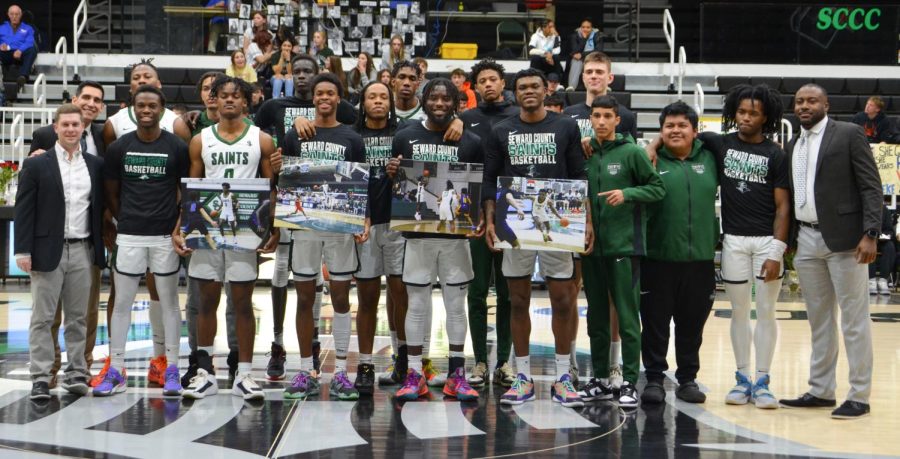
![The sophomores were recognized on the field instead of walking across the stage during their doubleheader. They received their diplomas and a picture of themselves playing during their career at Seward. [Pictured left to right are Dylan Day, Reed Thomas, Jase Schneider, Mason Martinez, Gannon Hardin, Brody Boisvert, and Zach Walker]](https://crusadernews.com/wp-content/uploads/2022/05/WEBDSC_0275-900x454.jpg)































As online education continues to grow across the United States, colleges are facing new challenges involving identity verification, student participation, and financial aid fraud. Recent cases connected to Seward County Community College have shown how difficult it can sometimes be for institutions to distinguish real students from so-called “ghost students” operating through online systems.
According to Amy Bridenstine, three individuals connected to SCCC were identified in financial aid fraud cases that also involved other community colleges. The cases mainly occurred through online enrollment systems and involved the misuse of federal financial aid programs.
The scheme involved people enrolling in classes using false or stolen identities, applying for federal student aid through FAFSA, and receiving financial aid refunds without genuinely participating in courses.
Sherelle W. Lee explained that the financial aid process begins with the FAFSA application, which is reviewed through multiple federal verification systems before colleges receive the information. Once approved, financial aid first covers tuition and fees, and any remaining balance is returned to the student as a refund.
As colleges increasingly depend on digital systems, staff members say online enrollment has made some fraudulent activity more difficult to identify.
“Online has made it tricky, because you only know the person through the screen,” Lee said.
Lee described several warning signs that may raise concerns during the verification process, including robotic emails, suspicious addresses, unusual signatures, and students who repeatedly focus on refund payments rather than academics.
According to Lee, some fraudulent students also attempt to appear active online by occasionally submitting assignments or quizzes, making detection more complicated.
For many instructors, however, the issue is still unfamiliar. Kevin Gleason said he had never encountered anything like it before hearing about the cases.
“It was something new. It was unusual. I’d never heard of it before,” Gleason said.
Because many of his classes use a BlendFlex format, Gleason explained that professors often interact with students mainly through screens, emails, and online assignments. In some situations, suspicious students may appear technically enrolled while showing little authentic engagement.
“He never responded to any of my emails or anything,” Gleason said while describing one suspicious case.
Although technology has expanded access to education, Gleason believes it has also created new difficulties for colleges trying to maintain trust in online learning environments.
“Fundamentally, education is about trust,” Gleason said.
At the same time, he warned that colleges must balance security with maintaining healthy relationships between students and educators.
“The more draconian you are, the more untrusting students are going to be,” Gleason said.
SCCC staff members said new identity verification measures have recently been added during the admissions process to help prevent fraudulent enrollments.
While the identified cases involved only a small number of individuals, the situation reflects a broader challenge facing colleges nationwide as online education, digital enrollment systems, and AI-assisted communication continue to evolve.
The issue also highlights a difficult balance for modern colleges. Online education has created more flexible and accessible opportunities for students, especially for those who work, live far from campus, or need alternative schedules. However, the same systems designed to increase accessibility can also become vulnerable to abuse.
More than simply exposing financial fraud, the recent cases at SCCC raise larger questions about how colleges can preserve trust, accessibility, and academic integrity in an increasingly digital educational environment.